
Andrea Gash | April 2026
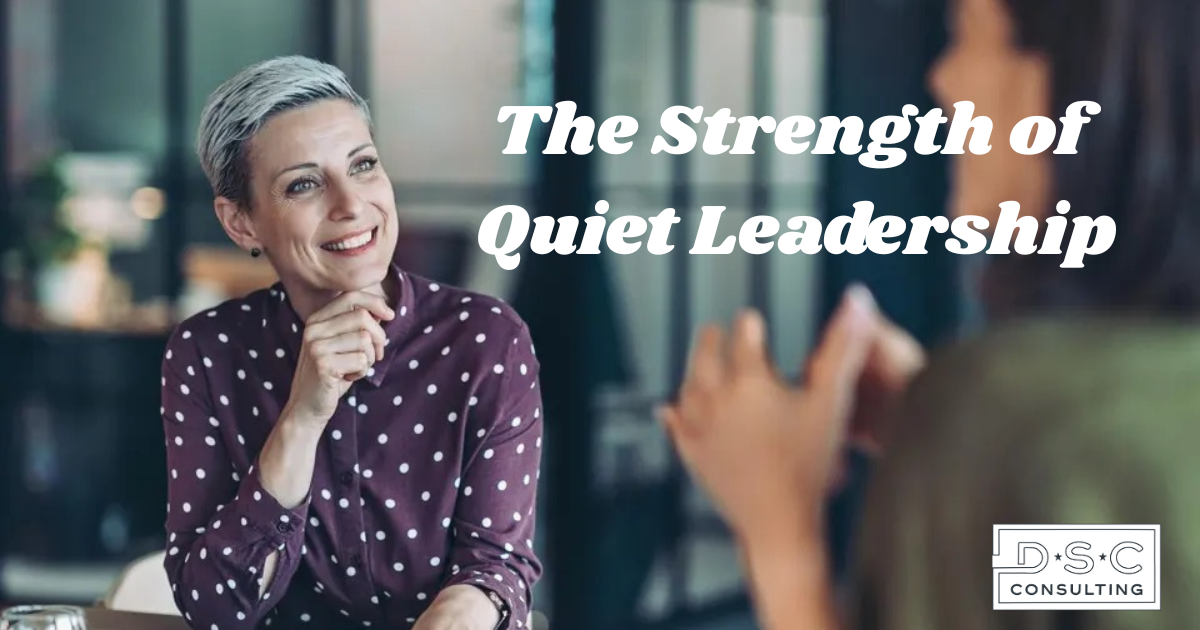
Lately, I’ve been hearing the phrase quiet leadership everywhere, and I’m glad this leadership style is finally getting the attention it deserves.
For many years, leadership has been associated with volume. The loudest voice in the room, the quickest response, and the one with the most to say have historically defined what leadership looks like. In many environments, speaking first and often is equated with confidence and competence.
A recent Forbes article challenged that assumption directly, noting that leaders who speak less, listen more, and act with intention are the ones who earn lasting trust and influence. That idea stuck with me.
In my experience, the most effective leaders are not always the most visible ones. They are the ones paying attention, asking thoughtful questions instead of rushing to answers, creating space for others to contribute, and then actually listening to what is said.
Quiet leadership is not passive, it is intentional.
It often starts with a pause before responding. It continues with listening to understand rather than simply replying, and it means choosing clarity over noise, even when the silence feels uncomfortable.
Quiet leaders build trust
When leaders do not dominate every conversation, something important happens. People feel empowered to contribute their ideas, take ownership of their work, and engage more fully with the team around them. When people feel genuinely heard, they show up differently. They take on more responsibility, share their thinking more openly, and they stay.
There is also a discipline to quiet leadership that often goes unnoticed. It requires resisting the pressure to react immediately, holding space for multiple perspectives even when the answer feels obvious, and sitting with silence, something many leaders find genuinely challenging.
Quiet leaders are not disengaged
Quiet leaders notice patterns. They pick up on what is not being said, and recognize when a team member is holding back. When they do speak, it carries weight, not because they speak often, but because they speak with intention.
In many of the organizations we work with, one of the biggest opportunities is not getting leaders to say more. The opportunity is helping them create space for others to say something meaningful. That shift alone can change the tone of a team, the quality of decisions, and the level of alignment across a group.
In a world that often rewards speed, visibility, and constant output, quiet leadership can feel countercultural. It can even feel uncomfortable at first.
But leadership is not about being the most heard. It is about making sure others are, and knowing when your voice matters most.
Are you a loud leader?
If you have spent most of your career being the one who drives conversation, fills silence, and leads from the front of the room, quiet leadership can feel completely out of your comfort zone. The transition is less about talking less and more about shifting your intention.
It starts with small, deliberate practices: waiting until others have spoken before you offer your perspective, asking a question when your instinct is to respond, and noticing what happens in the room when you create space instead of filling it. Over time, those small shifts compound. The goal is not to become someone you are not. It is to expand your range as a leader so that your voice, when you use it, lands with even greater impact.
This is the kind of leadership we help teams build at DSC Consulting, where our work is grounded in the belief that the most lasting change happens not in the loudest moments, but in the most intentional ones.
Cheryl Robinson, “The Workplace Skill Too Many Loud Voices Miss: Quiet Leadership,” Forbes, January 26, 2026.